
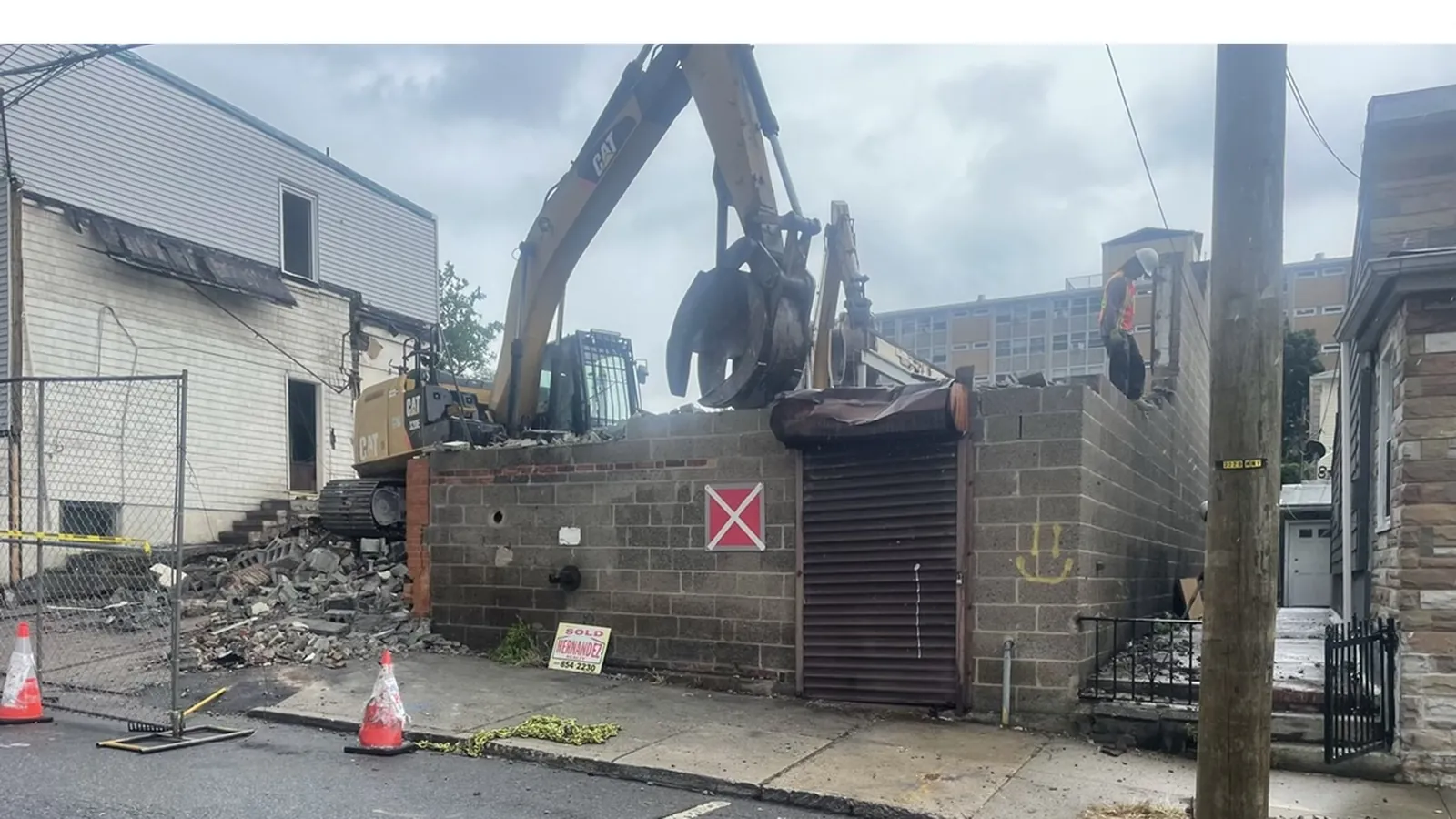
What Happens When a House Is Condemned in New Jersey?
When a house or any other building in New Jersey is condemned, the town’s construction official has found it unsafe. The rule is the state’s Uniform Construction Code, N.J.A.C. 5:23-2.32. The owner gets a written notice that lists the repairs, or orders the building vacated or demolished by a set time. The owner may seek review before the Construction Board of Appeals within 15 days of receiving it.
If the owner ignores the notice, the town’s lawyer can take the matter to court. In real danger of collapse, the construction official can order everyone out at once. The owner ends up with the bill.
TTL Services is a demolition contractor in Paterson, and demolition under a town’s order is part of our work. This guide follows the state’s rules for a condemned building. It is general information, not legal advice.
What does it mean when a house is condemned?
The rule covers every building and structure, a store or a warehouse as much as a house. Under N.J.A.C. 5:23-2.32, a building that is unsafe, unsanitary or a fire hazard “shall be taken down and removed or made safe and secure”. The code also deems “a vacant building that is unguarded or open at door or window” a fire hazard and unsafe.
How does a building get on the town’s list? It starts with a report. The code has the subcode official “examine every building or structure reported as dangerous”, then file a report in the town’s docket of unsafe structures. So the first step toward getting a house condemned is a report to the town’s construction office.
How does a notice of unsafe structure work?
When an unsafe or unsanitary condition turns up, the construction official serves a written notice. It describes the building and lists the repairs that would make it safe. Or it requires the building, or part of it, to be “vacated or demolished within a stipulated time”.
The notice asks the owner to declare right away whether they accept or reject the order. The deadline is the one the notice sets.
If the owner cannot be found in town, the notice goes by mail to the last address on file with the tax collector. A copy is posted on the property, and that counts as personal notice.
Can you appeal a condemnation notice in New Jersey?
Yes. An owner served with a notice of unsafe structure may seek review before the Construction Board of Appeals “within 15 days of receipt of the notice”.
An emergency order works differently. The code makes it “appealable only to a court of competent jurisdiction”. An attorney can say what either kind of appeal needs.
Can a condemned house be repaired instead of torn down?
Yes, the code allows it. In its words, “A building or structure condemned by the construction official” may be restored to a safe condition under the Rehabilitation Subcode, N.J.A.C. 5:23-6. Before anyone moves back in, the owner needs a certificate of approval or a certificate of occupancy.
A structural engineer can say which parts are sound. An older building may hold asbestos, and our guide to asbestos inspection before a demolition explains that survey.
If demolition makes more sense, our guide to the demolition permit in New Jersey covers the usual permit steps. For a whole house, our house demolition page shows how a teardown runs.
What happens if the owner ignores the notice?
Under the state code, the construction official will “forward the matter to the legal counsel of the jurisdiction for an action to compel compliance”. In plain terms, the town’s lawyer takes the owner to court.
A town can also adopt an unfit buildings ordinance under state law, N.J.S.A. 40:48-2.3 and the sections after it. The ordinance names a public officer. A petition from a public authority or at least five residents can start a case, and so can the officer alone.
The owner gets a complaint and a hearing set 7 to 30 days after it is served. If the officer finds the building unfit, the order calls for repairs or for closing it. If it is dangerous and stays unrepaired, the owner must remove or demolish it within a reasonable time.
A closed building can carry a placard. It reads: “This building is unfit for human habitation or occupancy or use; the use or occupation of this building is prohibited and unlawful”.
When the owner ignores a demolition order, the officer may have the building taken down by contract, after advertising for bids. That is the kind of demolition for towns and counties we find through public bid notices.
The two paths side by side:
| Step | State code, N.J.A.C. 5:23-2.32 | A town’s unfit buildings ordinance |
|---|---|---|
| Who acts | The construction official | A public officer the town names |
| What starts it | A report of a dangerous building | A petition from a public authority or at least five residents, or the officer |
| The notice | A written notice with repairs or a deadline | A complaint, then a hearing 7 to 30 days after it is served |
| If the owner ignores it | The town’s lawyer goes to court to compel the work | The officer may repair, close or demolish, with demolition bid out |
| Who pays | Emergency work: the town pays, then recovers it from the owner | The cost becomes a municipal lien against the property |
What happens when a building is about to collapse?
When there is “actual and immediate danger of failure or collapse” that would endanger life, the construction official may order everyone out. The order takes effect immediately, and a notice goes up at each entrance.
It reads, in part: “This structure is unsafe and its use or occupancy has been prohibited by the construction official”. Nobody may enter except to make the required repairs or to tear the building down.
The official then has the building made temporarily safe, and that work can include demolition. Demolition cannot start until “at least 24 hours following service of notice” on the owner. The exception is an owner whose name or address public records do not show. After that, demolition may go ahead unless the Superior Court stays it.
The unfit buildings law has a match. The public officer may make such a building temporarily safe, then seek a court judgment, through summary proceedings, to demolish it.
Who pays when the town tears down a condemned building?
In the end, the owner. For emergency work under the state code, the town pays from its treasury first. Its legal authority then takes action against the owner “for the recovery of such costs”.
Under an unfit buildings ordinance, the cost becomes a demolition lien, “a municipal lien against the real property” where the work was done. Legal costs of a case the town wins count too. Money from selling the building’s materials comes off the total, and the owner gets a copy of the cost statement by registered mail.
What should you do after a condemnation notice?
Read the notice for its deadline and the repairs it lists. Call the construction office with questions, and talk to an attorney before the 15 days run out. An unfit buildings ordinance is the town’s own law, so the town’s office has the final word on it.
When a building official orders a structure down, we take the call, look at the structure and put the plan and the quote in writing. We work under the town’s order with the owner, the insurer and the utilities. See our emergency demolition page, or call or text (973) 899-3366.